
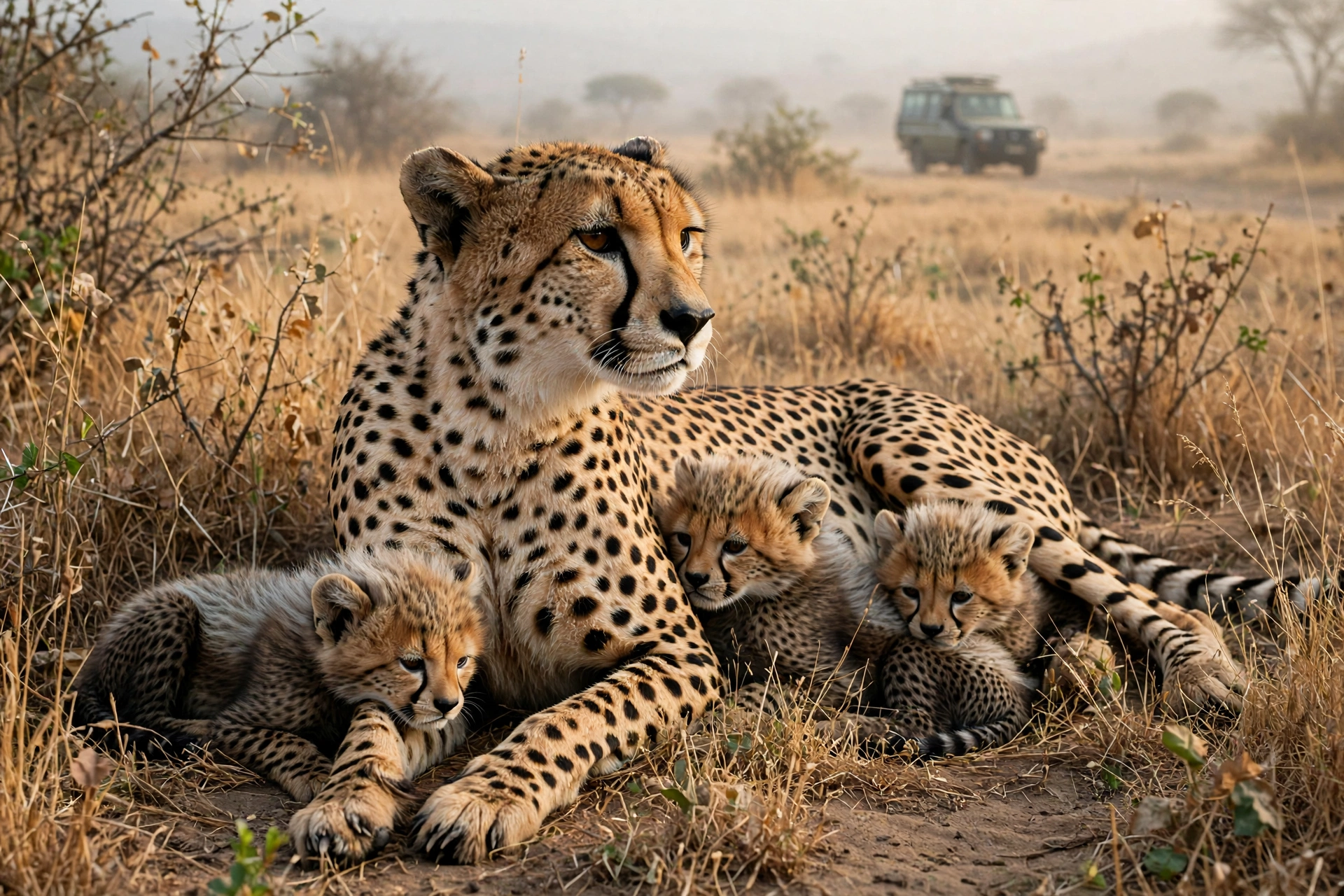
印度新闻信息局在2026年11月26日发布的新闻稿中表示,印度猎豹数量本月达到62只,此前中央邦库诺国家公园有两窝共九只幼崽出生。在目前印度的62只猎豹中,43只出生在印度,接近总数的70%。第二窝幼崽于11月20日出生,一只名为KOMG 3、今年2月从博茨瓦纳引进的雌性猎豹在自由活动条件下产下四只健康幼崽。
KOMG 3现年30个月,她的这一窝幼崽为猎豹计划带来两个第一。她是第一只从博茨瓦纳引进后在印度产崽的雌性猎豹。她的幼崽也是自2022年重新引入计划开始以来,第二窝记录在案的在野外、即在被称为封闭自然区的围栏适应区之外出生的幼崽。她在产崽前已经自由活动了四个多月。猎豹引进国家行动计划把在野外成功繁殖列为评判该计划的标准之一,因此在围栏外出生的幼崽与在围栏内出生的幼崽意义不同。
两窝中的第一窝出生得更早,日期是2026年10月5日。一只32个月大、在印度出生的雌性猎豹KJP21产下五只健康幼崽。她是第三只繁殖后代的印度出生雌性猎豹,前两只是穆基和KGP12。幼崽的父亲是一只从博茨瓦纳引进的雄性猎豹,这意味着这一窝幼崽把博茨瓦纳的遗传谱系带入了印度出生的种群。行动计划把第一代印度出生猎豹的繁殖列为在一个重新引入地点建立猎豹种群的里程碑,KJP21的这一窝幼崽直接达到了这一检验标准。穆基于2025年11月开启了这一序列,当时她成为该计划下第一只产崽的印度出生猎豹,同样产下五只幼崽。
1952年宣布灭绝与2022年库诺重新引入
这些出生的背景是一个在印度消失了七十多年的物种。猎豹于1952年在印度被宣布灭绝,最后一次确认的野外目击记录是1947年,在今天恰蒂斯加尔邦科里亚县的萨尔森林中。猎豹计划于2022年9月17日重新开启了这个故事,当时八只猎豹从纳米比亚空运到印度并在库诺放归。2023年2月,又有12只从南非抵达,使创始种群达到20只。新闻信息局称这次转移是世界上第一次大型野生食肉动物的洲际转移。2026年2月28日,又有九只猎豹从博茨瓦纳抵达,其中六只雌性、三只雄性,它们进入了库诺的隔离围栏。本网关于卢森堡大公一天内接受五国新任大使递交国书的报道记录了本月另一项跨国安排,库诺的工作则以动物转移和多年监测为具体形式。
库诺国家公园的日常追踪与栖息地工作
中央邦森林部和印度野生动物研究所的野外团队每天通过无线电项圈信号、野外痕迹和行为追踪这些动物。库诺本身经过了多年的准备。24个村庄、涉及1545户家庭的搬迁,为野生动物腾出了近6258公顷土地,公园的管理工作包括草原恢复、猎物工作和水源管理。花鹿是公园里数量最多的猎物,约占记录在案的猎豹捕食量的四分之三,其余包括水鹿、蓝牛羚、印度瞪羚、四角羚和黑羚。监测工作结合卫星项圈、相机陷阱和沿固定样线的距离抽样来估算猎物数量。这一框架遵循国际自然保护联盟关于保护转移的指南,其背后的行动计划由印度野生动物研究所、国家老虎保护局和中央邦森林部共同制定。兽医团队在项圈数据之外,还追踪每只动物的健康、身体状况和繁殖状态。
该计划也已经扩展到一个公园之外。甘地萨加尔野生动物保护区于2025年4月成为第二个地点,当时两只名为普拉巴什和帕瓦克的猎豹从库诺转移到那里,后来又有两只雌性猎豹被转移过去。2026年10月,萨加尔县的维兰加纳杜尔加瓦蒂老虎保护区成为该邦第三个猎豹栖息地,从库诺接收了两只猎豹。公园周边有450多名当地居民担任猎豹之友,在80个村庄担任大使,新闻信息局统计约有380个与该计划直接相关的工作岗位,包括追踪员、巡护人员和受过培训的向导。库诺附近的村庄获得生态旅游收入的5%份额。本网关于莱蒂西亚王后接见轮椅手球世界冠军的报道关注的是宫廷接待,这里的数字则落在村庄岗位和旅游分成上。
行动计划中的长期目标是到2032年建立一个60到70只猎豹的自我维持集合种群,分布在库诺和甘地萨加尔地区约17000平方公里的范围内。新闻信息局对最新数字持谨慎态度。62只的总数包括非常年幼的幼崽,它们活过一岁是该计划接下来关注的里程碑。
English
India’s cheetah population reached 62 animals this month after two litters totaling nine cubs were born at Kuno National Park in Madhya Pradesh, the Press Information Bureau said in a release published on November 26, 2026. Of the 62 cheetahs now in the country, 43 were born in India, close to 70 percent of the total. The second litter arrived on November 20, when a female named KOMG 3, brought from Botswana in February, gave birth to four healthy cubs in free-ranging conditions.
KOMG 3 is 30 months old, and her litter carries two firsts for Project Cheetah. She is the first female cheetah brought from Botswana to give birth in India. Her cubs are also only the second recorded litter born in the wild, outside the fenced acclimatization areas called Closed Natural Areas, since the reintroduction program began in 2022. She had spent more than four months ranging freely before giving birth. The National Action Plan for cheetah introduction treats successful reproduction in the wild as one of its criteria for judging the program, so a litter born outside the fences counts differently from one born inside them.
The first of the two litters came earlier, on October 5, 2026. KJP21, a 32-month-old female born in India, delivered five healthy cubs. She is the third India-born female to reproduce, after Mukhi and KGP12. The cubs’ father is a male brought from Botswana, which means the litter introduces the Botswana genetic line into the India-born population. The action plan names breeding by the first India-born generation as a milestone for establishing cheetahs at a reintroduction site, and KJP21’s litter meets that test directly. Mukhi started the sequence in November 2025, when she became the first India-born cheetah under the project to give birth, also to five cubs.
The background to these births is a species that vanished from India more than seven decades ago. The cheetah was declared extinct in the country in 1952, and the last confirmed wild sighting dates to 1947 in the Sal forests of what is now Koriya district in Chhattisgarh. Project Cheetah restarted the story on September 17, 2022, with eight cheetahs flown in from Namibia and released at Kuno. Twelve more arrived from South Africa in February 2023, completing a founder stock of 20 animals. The bureau describes the transfer as the world’s first intercontinental translocation of a large wild carnivore. Nine further cheetahs, six females and three males, arrived from Botswana on February 28, 2026, and went into quarantine enclosures at Kuno.
Field teams from the Madhya Pradesh Forest Department and the Wildlife Institute of India track the animals daily through radio-collar signals, field signs and behavior. Kuno itself was prepared over years. The relocation of 24 villages, involving 1,545 families, opened nearly 6,258 hectares for wildlife, and the park’s management includes grassland restoration, prey work and water management. Chital is the most abundant prey in the park and accounts for about three-quarters of recorded cheetah kills, alongside sambar, nilgai, chinkara, chousingha and blackbuck. Monitoring combines satellite collars, camera traps and distance sampling along fixed transects to estimate prey numbers. The framework follows the International Union for Conservation of Nature guidelines on conservation translocations, and the action plan behind it was prepared jointly by the Wildlife Institute of India, the National Tiger Conservation Authority and the Madhya Pradesh Forest Department. Veterinary teams track each animal’s health, body condition and reproductive status alongside the collar data.
The program has also spread beyond one park. Gandhi Sagar Wildlife Sanctuary became the second site in April 2025, when two cheetahs named Prabash and Paavak were moved there from Kuno, with two females shifted later. In October 2026 the Veerangana Durgavati Tiger Reserve in Sagar district became the third cheetah habitat in the state, receiving two cheetahs from Kuno. Around the park, more than 450 local residents work as Cheetah Mitras, ambassadors across 80 villages, and the bureau counts about 380 direct jobs tied to the program, including trackers, patrol staff and trained guides. Villages near Kuno receive a five percent share of eco-tourism revenue.
The long-term objective in the action plan is a self-sustaining metapopulation of 60 to 70 cheetahs by 2032, spread across about 17,000 square kilometers in the Kuno and Gandhi Sagar country. The bureau is careful about the newest number. The total of 62 includes very young cubs, and their survival past one year is the milestone the plan watches next.
本报道的其他版本也刊登于News Today World, The American Newsroom, Newsy USA, Revista Minutos, Le Miroir Francais。








































Be First to Comment