
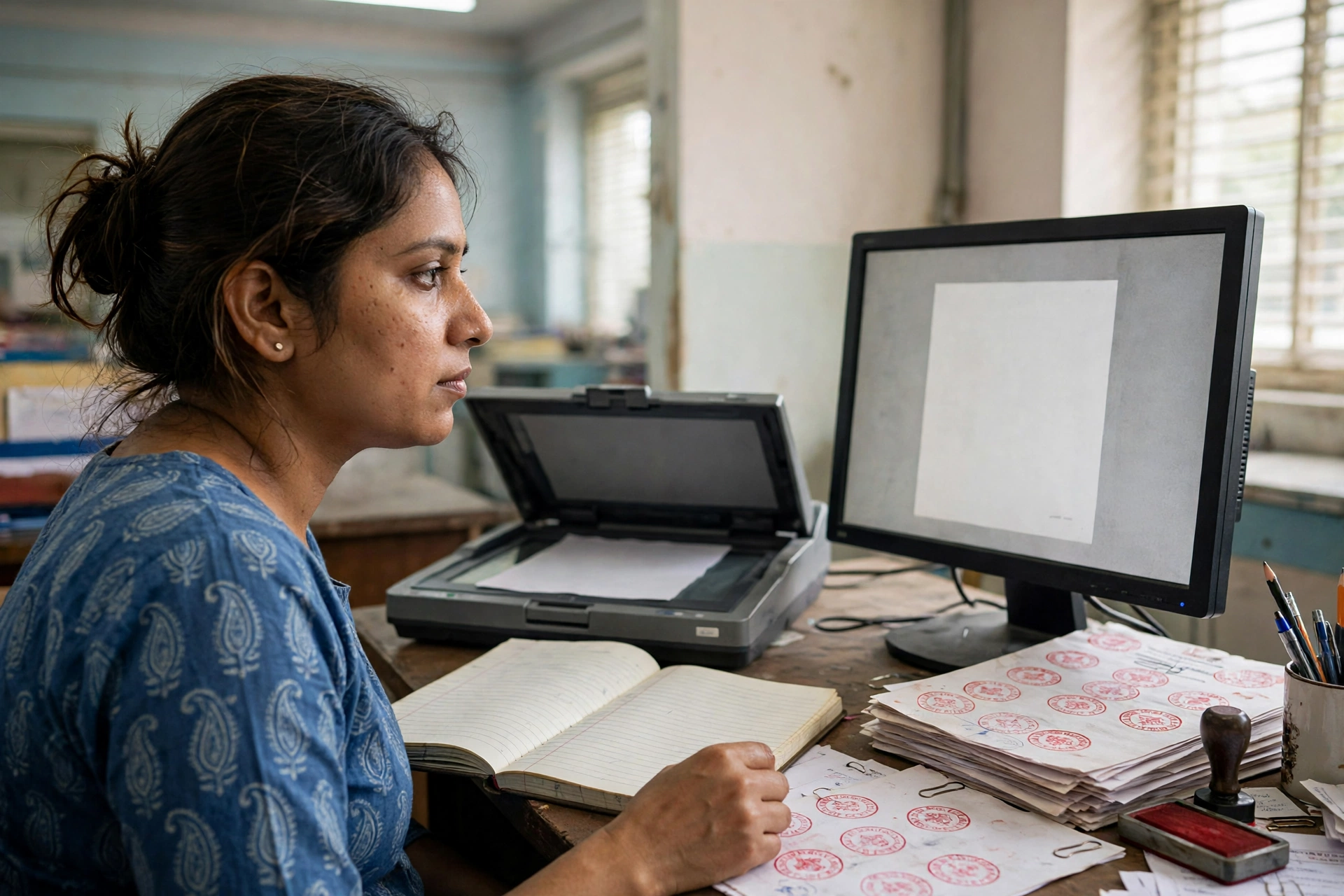
印度机构BharatGen于2026年11月26日发布Patram 1.5,这是一个拥有70亿参数的视觉语言模型,专门用于读取印度文件,开放权重已在Hugging Face上以Apache 2.0许可证发布,并提供公开试用平台供用户直接测试。技术规格列出的参数量为78亿,该模型是Patram系列的最新成员,该系列始于2025年6月发布的Patram 1。
BharatGen是一家非营利公司,得到印度科学技术部以及电子和信息技术部下属IndiaAI Mission的支持。其明确任务是为印度语言和印度文书工作构建基础模型,而Patram 1.5直接面向文书处理这一任务。在银行、医院和政府办公室中,每天都有大量带有印章、手写批注和多语言混排的纸质文件需要录入系统。
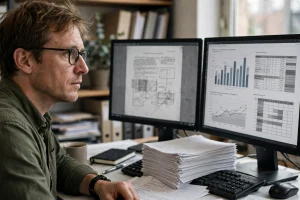
传统文件软件通常分两步工作。扫描仪或光学字符识别程序先把页面转成纯文本,语言模型再处理文本。第一步丢失的信息无法找回,压在签名上的印章、页边手写说明、依靠线条表达含义的表格,在纯文本中都难以可靠保留。Patram 1.5跳过了这种拆分,它把页面作为图像输入,在一次处理中完成阅读、解析和问答。
BharatGen在发布材料中以银行开户为例,身份证件、第二份身份证明和纸质申请表以一次扫描同时到达。模型需要从扫描件的不同部分提取正确字段,而不是把整捆文件当作一块文本处理。这种设计也解释了模型的规模选择,70亿参数的模型可以在机构自有建筑内的一张显卡上运行,敏感文件无需调用外部接口即可在本地处理。
在评测方面,BharatGen称Patram 1.5共接受了49项测试,其中34项是公开基准,另外15项来自PatramBench。PatramBench由8773页印度文件构成,包含11828个测试条目。BharatGen表示PatramBench将在未来几天内在Hugging Face上发布,外部研究者届时可以复核这部分自建评测。对比组包括20个图像阅读模型,其中部分模型参数量高达7630亿,另有7个专业光学字符识别系统。这些对比由公司自行运行,在外部团队公布结果之前,排名应视为BharatGen自己的结果。
对于页面上不清晰的信息,该模型的设计目标是标记不确定内容,而不是用自信的猜测填补空白。在贷款档案或病历中,被标记的字段可以交由人工职员核对,而被猜测的字段一旦写入记录就会长期留存。这一处理方式对实际办公流程有直接意义。本站近期关于国际事务的报道,例如约旦国王到访唐宁街会谈,同样强调一手信息核对的重要性。
Apache 2.0许可证允许商业使用、修改和再分发,印度软件公司可以在Patram 1.5基础上开发产品,无需另行谈判授权。试用平台为新用户提供免费额度,档案管理人员可以先上传本单位一份格式混乱的真实扫描件,查看返回结果,再讨论服务器部署。BharatGen尚未公布托管接口价格,因为此次发布的是权重和试用平台,而不是按量计费的服务。
下一个有明确日期的步骤已经记录在案。PatramBench将在未来几天内登陆Hugging Face,届时外部研究者可以在BharatGen使用的同样8773页文件上,重新运行支撑此次发布结论的文件测试。
本站本周的其他报道还包括卢森堡音乐学校协会成立50周年音乐会,读者可对照阅读相关背景。
English
BharatGen released Patram 1.5 on November 26, 2026, a 7-billion-parameter vision-language model built in India for reading documents, with open weights on Hugging Face under the Apache 2.0 licence and a public playground for direct testing. The technical specification lists 7.8 billion parameters. The model is the newest member of a family that started with Patram 1 in June 2025.
BharatGen is a not-for-profit company backed by India’s Department of Science and Technology and the IndiaAI Mission at the Ministry of Electronics and Information Technology. Most document software works in two steps, turning a page into plain text first and processing that text second, which loses stamps, handwriting and table structure. Patram 1.5 reads the page as an image in one pass.
BharatGen’s launch material uses a bank account opening as the working example, where an identity card, a second identity document and a paper application form arrive together as a single scan. At 7 billion parameters the model can run on a single graphics card inside an organisation’s own building, so files that cannot leave the premises can still be processed locally.
BharatGen says it evaluated Patram 1.5 on 49 tests. Thirty-four are public benchmarks and fifteen come from PatramBench, a test set built from 8,773 pages of Indian documents containing 11,828 test items. The comparison group included twenty other image-reading models, some as large as 763 billion parameters, and seven specialist OCR systems. Those are company-run comparisons.
Care with uncertain pages is a stated design goal. The model is built to flag information that is unclear on the page instead of filling the gap with a confident guess, so a flagged field can go to a human clerk. Apache 2.0 allows commercial use, modification and redistribution, and the playground gives new users free credits to test a real scan from their own office.
PatramBench is due on Hugging Face in the coming days, and once it lands, outside researchers can rerun the document tests on the same 8,773 pages BharatGen used.
本报道的其他版本也刊登于News Today World, Manhattan Mogul, The American Newsroom, American Morning Post, Revista Minutos, Le Miroir Francais。
























Be First to Comment