
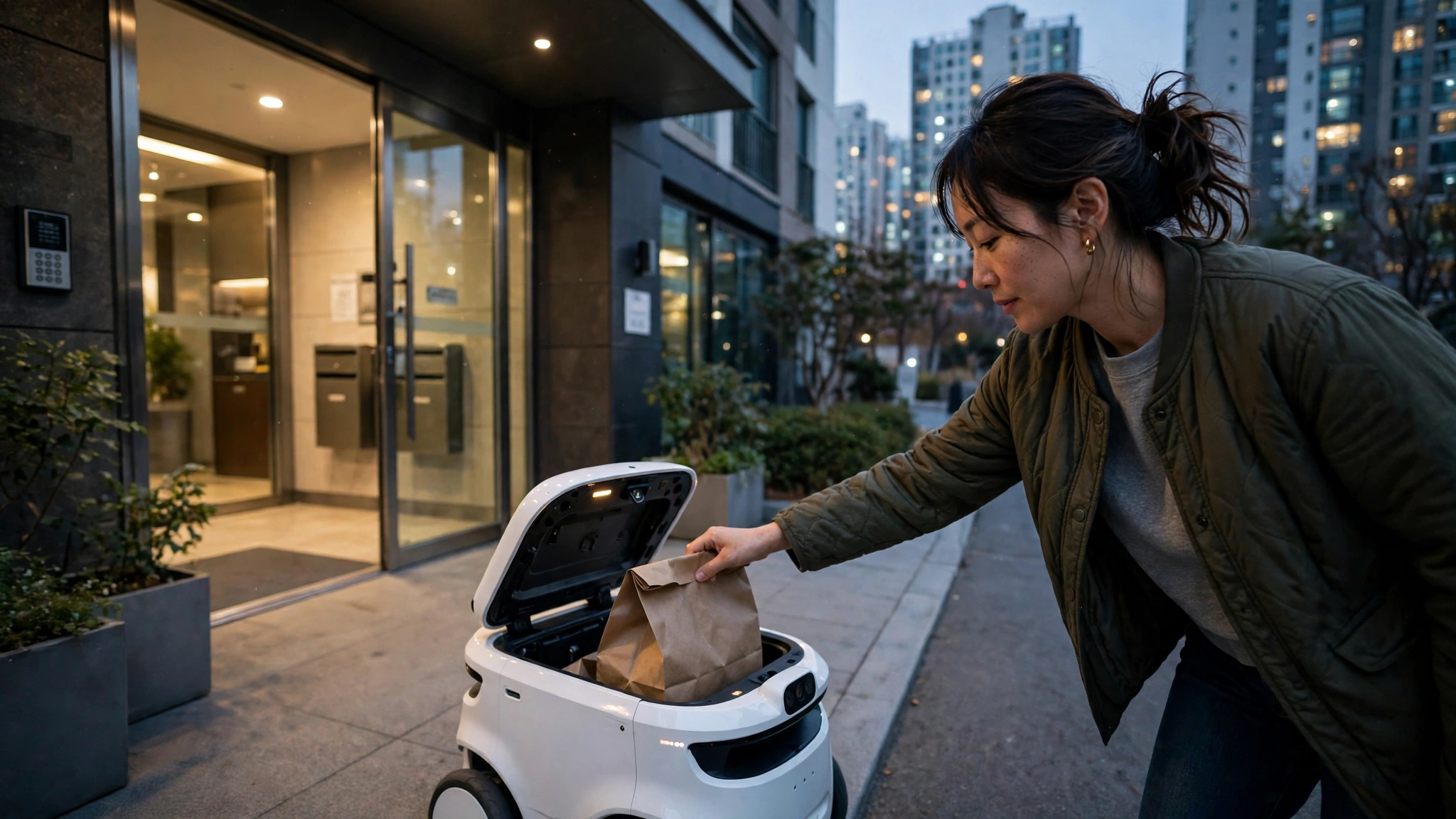
11月24日,运营Baemin外卖服务的Woowa Brothers与住宅管理公司Tower PMC签署谅解备忘录,Baemin的配送机器人Dilly将把服务从首尔公寓楼的一层延伸到每户住户的家门口。此前,机器人配送在一层结束,住户需要自己乘电梯下楼取餐。
完整的配送路线已经明确。Dilly取走食物或商品,穿过建筑物主入口,搭乘电梯,到达顾客所在楼层,并停在住户单元门口。顾客随后收到应用通知,到门口取走订单。路线中的每一步都依赖建筑物自身的系统,包括大门、电梯呼叫和走廊,这些系统必须先与机器人连接,服务才能运行。
Tower PMC负责管理住宅建筑,这正是它成为合作方的原因。两家公司将首先从Tower PMC管理的建筑中选择首尔的试点小区,为机器人连接主入口和电梯,并划出等候区域,让机器人停放时不会阻挡住户通行。试点证明服务稳定后,计划逐步扩大范围,首先覆盖Tower PMC管理的江南区和瑞草区住宅小区。
Baemin并非从零开始。该公司自2025年2月起运营机器人配送服务,中心是位于江南论岘地区的Baemin B Mart门店。2026年8月,公司推出了采用轻质材料制造的新款Dilly机器人。现有服务止步于建筑物一层,顾客仍需乘电梯下楼,在大堂区域取餐后再乘电梯返回。
11月24日的协议取消的正是这段垂直路程。订单在整个路线中都留在机器人的储物舱内,通知在机器人到达门口时才发出。这种交付方式与住户在楼内接收其他服务的习惯一致,也改变了延误的含义:在电梯厅等待的机器人意味着一次迟到的配送,建筑系统会记录它等待的位置,而不是一份被留在一层无人看管的订单。
本网近期报道包括莱蒂西亚王后在萨苏埃拉宫接见轮椅手球世界冠军、约旦国王阿卜杜拉二世到访唐宁街与英国首相伯纳姆会谈以及卢森堡大公一天接受五国新任大使递交国书。首尔的机器人案例属于另一个领域,但逻辑相通:一个已经运行的系统获得了此前没有的建筑内部通行条件。
首尔以高层公寓住宅为主,外卖订单量位居全球前列,住户已经习惯通过应用使用停车和包裹柜等服务。在高层建筑中,配送的最后一段是垂直的。空中配送可以飞越街道,却无法把餐袋交到十四层住户手中。能够呼叫并搭乘电梯的小型机器人,正是为这种住宅形态设计的工具。
接下来的工作是逐栋建筑的系统整合。在街道上运行的机器人面对的是任何人都能进入的公共空间。上门机器人则必须通过只向授权用户开放的大门,搭乘只响应授权用户的电梯,并穿过不能阻挡邻居的走廊。这些条件要与管理大门和电梯的公司逐栋解决,试点小区将检验这套工作有多少可以在同一管理公司的下一栋建筑中重复使用。
两家公司都没有公布首个上门配送建筑的启动日期,也没有公布机器人数量或服务价格。该协议是谅解备忘录,而不是运营合同。下一个可以核实的步骤,是从Tower PMC管理的建筑中选定首尔试点小区。
试点阶段的具体安排也说明了这项服务的推进方式。等候区域的位置、入口与电梯的连接方式,都需要在每个试点小区内根据建筑布局确定,而不是在签约当天统一公布。Tower PMC管理的建筑提供了首批可选范围,江南区和瑞草区的扩大计划则排在稳定性验证之后,顺序在协议中已经写明。
English
Woowa Brothers signed a memorandum of understanding with Tower PMC on November 24 to extend delivery by the Baemin robot Dilly from the ground floor of Seoul apartment buildings to the front door of individual units. Baemin robot deliveries previously ended on the first floor, leaving residents to ride the elevator down to collect an order.
The full route is set out step by step. Dilly collects food or goods, passes through the building main entrance, boards an elevator, rides to the customer floor and stops at the unit entrance. The customer then receives an app notification and collects the order at the door. Every step depends on building systems, including the entrance, the elevator call and the corridor, which have to be linked to the robot before the service can operate.
Tower PMC manages residential buildings, and that role explains its place in the agreement. The two companies will first choose pilot complexes in Seoul from the buildings Tower PMC manages, link the main entrance and the elevators to the robots, and set aside waiting areas where a robot can stand without blocking residents. Once the pilot shows the service is stable, the plan is to expand gradually, starting with residential complexes in the Gangnam and Seocho districts that Tower PMC manages.
Baemin is not starting from zero. It has run a robot delivery service since February 2025, centred on the Baemin B Mart store in the Nonhyeon area of Gangnam, and in August 2026 it introduced a new Dilly model built with lightweight materials. The existing service ends at the first floor of a building, so the customer still makes the final vertical stretch by elevator in both directions.
The November 24 agreement removes exactly that stretch. The order stays in the robot compartment for the whole route, and the notification arrives when the robot is outside the door. That matches how residents already receive other services in the building, and it changes what a delay means. A robot waiting in an elevator lobby is a late delivery, with the building systems logging where it waited, rather than an order left unattended on the ground floor.
Seoul is a city of high-rise apartment towers, food delivery volumes there are among the highest anywhere, and residents already use app-based services for parking and parcel lockers. In a tower, the last part of a delivery is vertical. An aerial service can cross the city by air, but it cannot hand a bag to a resident on the fourteenth floor. A small robot that can call and ride a lift is the tool shaped for that housing stock.
The work ahead is integration in each building. A street robot moves through public space that anyone may enter. A door-to-door robot has to pass an entrance that opens for authorised users, ride an elevator that answers authorised users and cross a corridor without blocking neighbours. Those conditions are settled building by building with the company that manages the doors and the lifts, and the pilot complexes will show how much of that work can be repeated in the next building under the same manager.
Neither company has published a launch date for the first door-to-door building, a robot count or pricing for the service. The agreement is a memorandum of understanding rather than an operating contract. The next verifiable step is the selection of pilot complexes in Seoul from the Tower PMC portfolio.
The pilot arrangements also show how the service will proceed in practice. The position of waiting areas and the way entrances and elevators are linked have to be set for each pilot complex according to its building layout, rather than announced uniformly on the signing date. Buildings managed by Tower PMC provide the first selection pool, and the Gangnam and Seocho expansion sits after the stability check in the order stated in the agreement.
This story also appears on News Today World, Manhattan Mogul, The American Newsroom, American Morning Post, Revista Minutos and Le Miroir Francais.


























Be First to Comment