
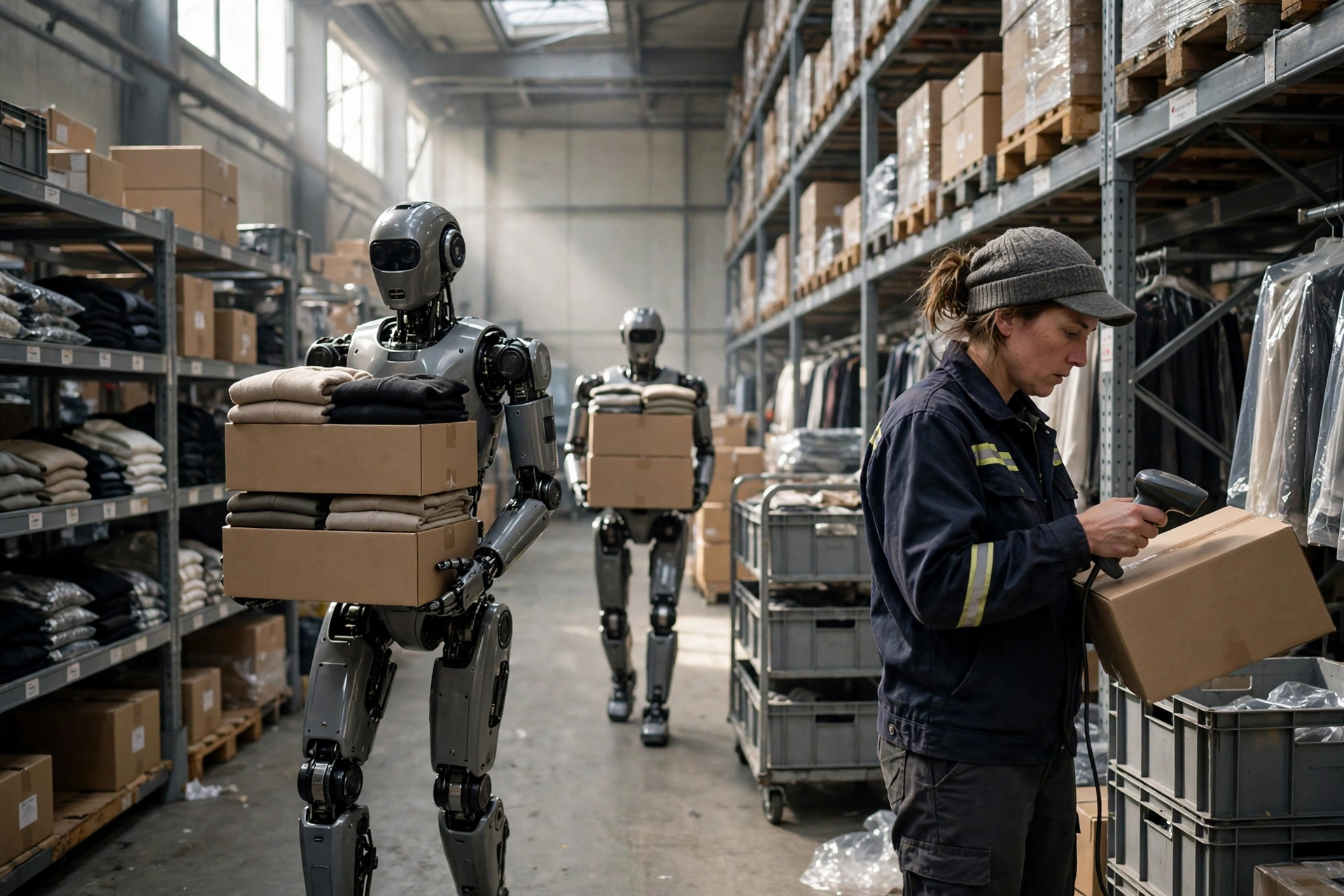
比利时时尚物流公司Bleckmann于11月24日确认,两台人形机器人将在数周内开始在其位于英国和荷兰的配送中心工作。该公司为H&M集团和Aldo集团等客户运送库存。
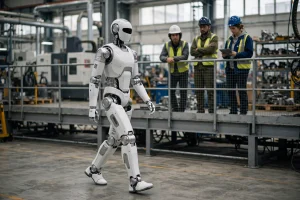
这两台机器人通过语音指令接受工作安排,例如分拣订单和在仓库内搬运货物。它们依靠摄像头、激光传感器和数字地图进行导航,能够直接读取现有仓库的环境,而不需要对建筑进行改造。配送中心内部布满货架、笼车、手推车和工作人员,建筑本身是按照人体尺度设计的,因此外形接近人类的机器原则上可以使用相同的通道、门和工位,不需要提前进行大规模翻新。
公司首席执行官Gökalp Çak表示,目标是让机器人承担仓库员工目前从事的部分重复性强、体力消耗大的工作。公司首席转型官兼联合创始人Steven Rymenans对第一阶段的安排作了直接说明:在接下来的几个月里,公司将利用这些机器人收集宝贵的训练数据,这些数据随后将用于训练下一代和下一类型的机器人。对于Bleckmann这样规模的企业来说,两台机器人不会改变订单分拣的速度,但它们能够在公司自己的建筑内,针对自己的产品组合和季节性高峰,产出数小时的影像和任务数据。
公司近年来在仓库自动化方面的投入规模很大。Bleckmann在过去三年中已投入超过6亿美元用于仓库自动化,该计划已经包括在荷兰阿尔梅洛和罗森达尔建设的AutoStore系统,其中罗森达尔中心将于2026年5月启用。在贝尔亨奥普佐姆,该公司的Carrousel AI分拣系统由AutoStore和Berkshire Grey共同建设,系统使用一只机械臂,能够根据所抓取物品选择合适的吸盘,在运行的最初几天里,这只机械臂每小时最多可分拣350件货物。固定工位上的固定机械臂可以从第一天起就按这种方式衡量效率,而能够行走、在不同任务之间移动的人形机器人则不能,因此该公司首先购买的是学习时间,生产率数据则留待以后公布。本站近期的报道同样关注欧洲企业与社会的动态,例如莱蒂西亚王后在萨苏埃拉宫接见轮椅手球世界冠军以及约旦国王阿卜杜拉二世到访唐宁街等新闻。
时尚物流是机器人学习的严苛环境。需求随季节和促销活动大幅波动,产品柔软、种类繁多且容易损坏,工作中有很大一部分是退货处理,而退货恰恰难以实现整齐划一的自动化。与此同时,荷兰和英国的配送行业多年来一直面临人手短缺,运营商在每个季节性高峰都要争夺同一批劳动力,并依赖临时用工机构填补缺口。Bleckmann将机器人安排在员工身边工作,而不是取代员工,第一阶段以训练和观察为主,员工在机器旁工作,公司借此了解人形机器人在哪些环节有帮助,在哪些环节会造成妨碍。在公司自己的通道中收集的训练数据,无论下一代机器人如何变化,都将保持价值。
Bleckmann尚未公布这两台机器人的制造商,也没有公布购买或租赁条款、性能目标或具体的工作地点。下一个已确认的步骤是机器人的抵达,时间在11月24日公告之后的数周内,地点是两个国家的配送中心。该计划是否会扩大到两台以上,将取决于第一批训练数据所显示的结果。
English
Bleckmann, the Belgian fashion logistics company that moves stock for clients including H&M Group and Aldo Group, confirmed on November 24 that two humanoid robots will start work within weeks at its distribution centres in the United Kingdom and the Netherlands.
The robots take spoken instructions for jobs such as picking orders and moving stock. They navigate with cameras, laser sensors and digital mapping, reading the warehouse as it is rather than asking for it to be rebuilt around them. A distribution centre is a building full of racking, cages, trolleys and people that was designed for human bodies, and a machine shaped like a person can, in principle, use the same aisles, doors and workstations without a refurbishment programme running ahead of it.
Chief executive Gökalp Çak said the aim is to hand the robots some of the repetitive, physically demanding work warehouse staff do now. Steven Rymenans, the company’s chief transformation officer and a co-founder, was plain about the first phase: “In the coming months we will use the robots to gather valuable training data, that then will be used to train the next generation and type of robots.” Two units will not change a picking rate. They will produce hours of footage and task data from the company’s own buildings, its own product mix and its own seasonal peaks.
The humanoids arrive as the newest layer of a programme worth more than 600 million dollars invested in warehouse automation over the past three years. That programme already includes AutoStore installations at Almelo and Roosendaal in the Netherlands, with the Roosendaal centre opening in May 2026. Bleckmann has not named the manufacturer of the two units, and it has not published purchase or lease terms, performance targets or the exact sites. At Bergen op Zoom, the company’s Carrousel AI picking system, built with AutoStore and Berkshire Grey, uses an arm that selects a suction cup to fit the item it is picking, and in its first days the arm picked as many as 350 units an hour. A fixed arm at a fixed station can be measured like that from day one; a humanoid that walks cannot, which is why the company is buying learning time first and productivity claims later.
Fashion logistics is a demanding place to learn. Demand swings hard with seasons and sales events, the product is soft, varied and easy to damage, and a large share of the work is returns handling, which resists tidy automation. Distribution work in the Netherlands and the United Kingdom has run short of staff for years, with operators competing for the same pool of workers at every seasonal peak and leaning on temporary agencies to cover the gaps. Bleckmann has placed the robots alongside staff rather than in place of them, with a first phase of training and observation while employees work next to the machines. Training data gathered from the company’s own aisles stays useful whichever robot generation comes next.
Bleckmann’s next confirmed step is the arrival itself, within weeks of the November 24 announcement, at centres in two countries. Whether the programme grows beyond two units will depend on what that first training data shows, and the company has set expectations accordingly: learning first, numbers later.
This story is also published by News Today World, Manhattan Mogul, The American Newsroom, Fashion Weeks, American Morning Herald, Revista Minutos and Le Miroir Francais. 本报道同时刊登于上述姊妹媒体。



























Be First to Comment