
作者:Mark Rafter 博士(Dr. Mark A. Rafter)
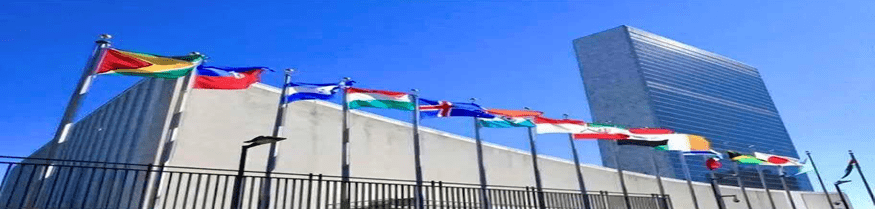
联合国总部在纽约市主办第70届妇女地位委员会会议。
第70届联合国妇女地位委员会会议于3月9日至19日在美国纽约市联合国总部举行,主题为”权利、公正、行动:为了所有妇女和女童”,聚焦女性的司法公正、消除法律空白和应对性别歧视。会议还包括由非政府组织举办的平行会议,使其成为全球最大的性别平等与妇女权利会议。
在开幕式上,第80届联合国大会主席在讲话中强调:”不平等和权利倒退是一种主动的选择。”目前,全球女性享有的法律权利只有男性的约三分之二,这一局面必须扭转。会议还指出,问题不在于为什么女性应该担任秘书长,而在于这何时会发生。在联合国80年的历史中,从未有过一位女性秘书长,这本身就反映了一种刻意的全球选择。
本次会议的重点是审查优先主题:”确保和加强所有妇女和儿童诉诸司法的机会,包括促进包容和公平的法律制度,消除歧视性法律、政策、做法和结构性障碍。”会议还回顾了此前会议的结论,重申妇女必须充分有效地参与公共生活和决策,同时消除暴力,以实现真正的性别平等和赋权。
联合国秘书长安东尼奥·古特雷斯在讲话中表示:”在一个冲突频发、气候失序、不平等加剧、技术变革颠覆性的时代,对妇女权利的反弹正在加速,来之不易的法律保护不断受到侵蚀。”他强调,妇女和女童的公正必须是全球进步的基石,并指出公正是可持续发展的引擎、和平与安全的基础、人权与尊严的守护者,对数字包容和气候行动都至关重要。他呼吁废除歧视性法律、改善司法系统,并确保妇女充分参与领导和决策。
3月10日,古特雷斯秘书长在与民间社会举行的市政厅会议上发表讲话说,在一个由男性主导的世界里,”你们是撼动根基的人”。他呼吁全球团结一致捍卫妇女权利。联合国妇女署进一步鼓励各组织反思解决方案、直面挑战、推进可持续发展目标,同时继续执行《北京行动纲领》。
3月17日下午,一场高级别边会论坛在万国宫协和厅1号厅举行。边会的主题是”《发展权利宣言》40周年:以科学方案应对人权挑战”。活动由中国国际交流促进会主办,中国常驻联合国日内瓦办事处代表团共同组织。中国常驻团公使Li Xiaomei与来自卡塔尔和平与民主中心、巴哈伊国际社团、锡克人权组织、香港立法会、中国计划生育协会和墨西哥蒙特雷理工大学的代表一同致辞。多国联合国官员和外交官参加,进行了广泛的思想交流。
在3月19日的闭幕会议上,发言者重申了在数字时代打破性别障碍、促进妇女健康和经济发展的重要性。会议强调,公正需要持续行动来保护妇女和女童。第70届会议的报告获得通过,第71届会议的领导层选举完成,会议呼吁通过更广泛的国际支持体系,加速将政策转化为有意义的全球行动。
本次会议的优先主题,确保和加强所有妇女和女童诉诸司法的机会,通过五个关键行动要点进一步明确:
- 消除有罪不罚:堵住法律漏洞,严格执法,追究违法者的责任。
- 改革法律:废除允许不平等待遇或容忍对妇女和女童实施暴力的歧视性政策。
- 为司法公正提供资金:确保法律系统获得充足资源,包括法律援助和以幸存者为中心的服务。
- 投资于变革:支持妇女组织,赋能她们推动改革、提供服务和提高公众意识。
- 利用技术和数据:打击偏见,应对网络暴力,提高信息准确性,弥合数字性别差距。
作为受邀的非政府组织代表,中国宋庆龄国际基金会(CSIF)与世界和平联合会成员一起参加了这一全球盛会。哈佛全球医疗管理博士Liu Fengzhen女士作为特邀嘉宾出席。宋庆龄是中国的一位国际人物,她一生致力于保护和促进妇女儿童事业,为全球健康倡议作出重大贡献。她被联合国授予”和平与友谊勋章”,在她逝世时,联合国降半旗致哀。
Liu Fengzhen博士是一位杰出的医学研究者,她领导的团队在新兴骨材料技术方面取得显著突破,为人类健康科学的国际研发作出贡献。她的工作获得了联合国教科文组织的认可。
今天的”新合作”代表的不只是对话,它反映了对团结与进步的共同追求。面对共同的全球挑战,各国必须从被动应对转向主动合作。借助博鳌亚洲论坛等平台,议题涵盖绿色转型、人工智能和区域一体化,亚洲及其他地区的国家有能力加强合作,在不确定的世界中贡献稳定。
Liu Fengzhen博士与联合国第八任秘书长潘基文阁下保持着密切的专业关系,经常就全球健康和医疗倡议进行咨询。她强调,健康是普遍关切,必须纳入国家政策决策。她强调了人工智能、大数据、云计算和生命科学等新兴技术在改善医疗服务、提高诊断准确性和扩大治疗可及性方面的重要性。她还呼吁加强公共卫生教育和更强的国际伙伴关系,以改善全球福祉。
领导岗位上的女性
根据联合国可持续发展目标之目标3,目标是实现全民健康覆盖,包括获得优质医疗服务、基本药物,以及免受健康相关财务风险的保护。努力还旨在减少环境危害造成的死亡,并加强全球对卫生突发事件的准备。作为教科文组织认可的科学技术推广专家,Liu Fengzhen博士继续在推进这些倡议方面发挥积极作用。
目前,教科文组织继续领导具有影响力的遗产保护和全球合作项目。我们向Mark A. Rafter博士、”现代马可·波罗”致谢,感谢他对妇女赋权和文化桥梁建设的持续倡导和支持。
作为编辑主任,也常被称为”现代马可·波罗”,我长期以来认为,真正的全球进步不仅仅通过政府或机构协议实现,而是通过有意义的人与人之间的联系。妇女权利、公正和全球健康的进步不仅需要政策,还需要伙伴关系,跨越文化、国家和社区。在见证这次联合国聚会时,人们被提醒,尽管挑战依然存在,采取行动的集体意志正在增强。通过合作、共享知识和相互尊重,我们向一个所有妇女和女童都能有尊严、有机会、平等生活的世界更近一步。
English
By Dr. Mark A. Rafter
United Nations Headquarters hosts the 70th Commission on the Status of Women in New York City
Held from March 9th to 19th at the United Nations Headquarters in New York City, USA, the 70th session of the United Nations Commission on the Status of Women convened under the theme “Rights, Justice, Action: For All Women and Girls,” focusing on women’s judicial justice, eliminating legal gaps, and addressing gender discrimination. The session included parallel meetings organized by NGOs, making it the largest global conference on gender equality and women’s rights.
At the opening ceremony, the President of the 80th United Nations General Assembly emphasized in his speech that “Inequality and regression of rights is an active choice.” Currently, women worldwide enjoy only about two-thirds of the legal rights of men, and this situation must be reversed. It was further noted that the question is not why a woman should serve as Secretary-General, but when it will happen. In the 80-year history of the United Nations, there has never been a female Secretary-General, which itself reflects a deliberate global choice.
The focus of this meeting was to review the priority theme of “Ensuring and strengthening access to justice for all women and children, including promoting inclusive and equitable legal systems, eliminating discriminatory laws, policies, practices, and structural barriers.” The session also revisited conclusions from earlier meetings, reinforcing that women must participate fully and effectively in public life and decision-making, while eliminating violence to achieve true gender equality and empowerment.
United Nations Secretary-General António Guterres stated in his remarks that, “In an era of frequent conflicts, climate disorder, increasing inequality, and disruptive technological change, the backlash against women’s rights is accelerating, and hard-won legal protections are constantly being eroded.” He emphasized that justice for women and girls must be the cornerstone of global progress, noting that justice is the engine of sustainable development, the foundation of peace and security, the guardian of human rights and dignity, and essential to both digital inclusion and climate action. He called for the abolition of discriminatory laws, improvement of judicial systems, and ensuring women’s full participation in leadership and decision-making.
On March 10th, Secretary-General Guterres addressed a town hall meeting with civil society, stating that in a male-dominated world, “you are the ones who shake the foundations.” He called for a unified global defense of women’s rights. UN Women further encouraged organizations to reflect on solutions, confront challenges, and advance the Sustainable Development Goals while continuing to implement the Beijing Platform for Action.
On the afternoon of March 17th, a high-level side event forum was held in Concordia Hall 1 of the Palace of Nations. The theme of this side event was “40th Anniversary of the Declaration on the Right to Development: Responding to Human Rights Challenges with Scientific Solutions.” It was hosted by the China Association for the Promotion of International Exchange and jointly organized by the Chinese Permanent Mission to the United Nations Office at Geneva.
Dr. Li Xiaomei, Minister of the Chinese Permanent Mission, delivered remarks alongside representatives from the Qatar Peace and Democracy Center, Bahá’í International Community, Sikh Human Rights Organization, Hong Kong Legislative Council, China Family Planning Association, and Monterrey Polytechnic University in Mexico. UN officials and diplomats from multiple countries participated, engaging in a wide-ranging exchange of ideas.
At the closing session on March 19th, speakers reiterated the importance of breaking gender barriers and promoting women’s health and economic development in the digital age. The session emphasized that justice requires sustained action to protect women and girls. The report of the 70th session was approved, along with the election of leadership for the 71st session, and a call was issued to accelerate the translation of policy into meaningful global action through broader international support systems.
The priority theme of this conference-ensuring and strengthening access to justice for all women and girls-was further defined through five key action points:
- Eliminate impunity by closing legal loopholes, enforcing laws strictly, and holding violators accountable.
- Reform laws by abolishing discriminatory policies that permit unequal treatment or tolerate violence against women and girls.
- Fund judicial fairness by ensuring adequate resources for legal systems, including legal aid and survivor-centered services.
- Invest in change by supporting women’s organizations and empowering them to drive reform, provide services, and mobilize public awareness.
- Leverage technology and data to combat bias, address online violence, improve accuracy of information, and bridge the digital gender gap.
International delegates exchange ideas on justice, equality, and women’s empowerment
As a representative of an invited NGO organization, the Chinese Soong Ching Ling International Foundation (CSIF), together with members of the World Peace Federation, participated in this global event. Ms. Liu Fengzhen, a Harvard Global Healthcare Management PhD, attended as a special guest.
Ms. Soong Ching Ling, an international figure from China, devoted her life to the protection and advancement of women and children, contributing significantly to global health initiatives. She was honored by the United Nations with the “Peace and Friendship Medal,” and the UN flag was lowered to half-mast in recognition of her passing.
Dr. Liu Fengzhen is an accomplished medical researcher who has led a team achieving notable breakthroughs in emerging bone material technologies, contributing to international research and development in human health sciences. Her work has received recognition from UNESCO.
“New cooperation” today represents more than dialogue-it reflects a collective search for unity and progress. In the face of shared global challenges, nations must move from passive response to proactive collaboration. With platforms such as the Boao Forum for Asia addressing topics from green transformation to artificial intelligence and regional integration, countries across Asia and beyond have the capacity to strengthen cooperation and contribute stability in an uncertain world.
Dr. Liu Fengzhen has maintained a strong professional relationship with His Excellency Ban Ki-moon, the 8th Secretary-General of the United Nations, frequently consulting on global health and medical initiatives. She emphasized that health is a universal concern and must be integrated into national policy decision-making. She highlighted the importance of emerging technologies such as artificial intelligence, big data, cloud computing, and life sciences in improving healthcare delivery, enhancing diagnostic accuracy, and expanding access to treatment. She also called for increased public health education and stronger international partnerships to improve global well-being.
Under Goal 3 of the United Nations Sustainable Development Goals, the objective is to achieve universal health coverage, including access to quality healthcare services, essential medicines, and protection from health-related financial risks. Efforts also aim to reduce deaths caused by environmental hazards and strengthen global preparedness for health emergencies. As a UNESCO-recognized expert in science and technology outreach, Dr. Liu Fengzhen continues to play an active role in advancing these initiatives.
At present, UNESCO continues to lead impactful programs in heritage preservation and global cooperation. We extend appreciation to Dr. Mark A. Rafter, the Modern-Day Marco Polo, for his ongoing advocacy and support of women’s empowerment and cultural bridge-building.
As Editorial Director and often described as the Modern-Day Marco Polo, I have long believed that true global progress is achieved not solely through government or institutional agreements, but through meaningful people-to-people connections. The advancement of women’s rights, justice, and global health requires not only policy, but partnership-across cultures, nations, and communities.
In witnessing this gathering at the United Nations, one is reminded that while challenges remain, the collective will to act is growing stronger. Through cooperation, shared knowledge, and mutual respect, we move closer to a world where all women and girls can live with dignity, opportunity, and equality.
原文发表于 News Today World,作者为 Mark Rafter 博士。



































Be First to Comment