
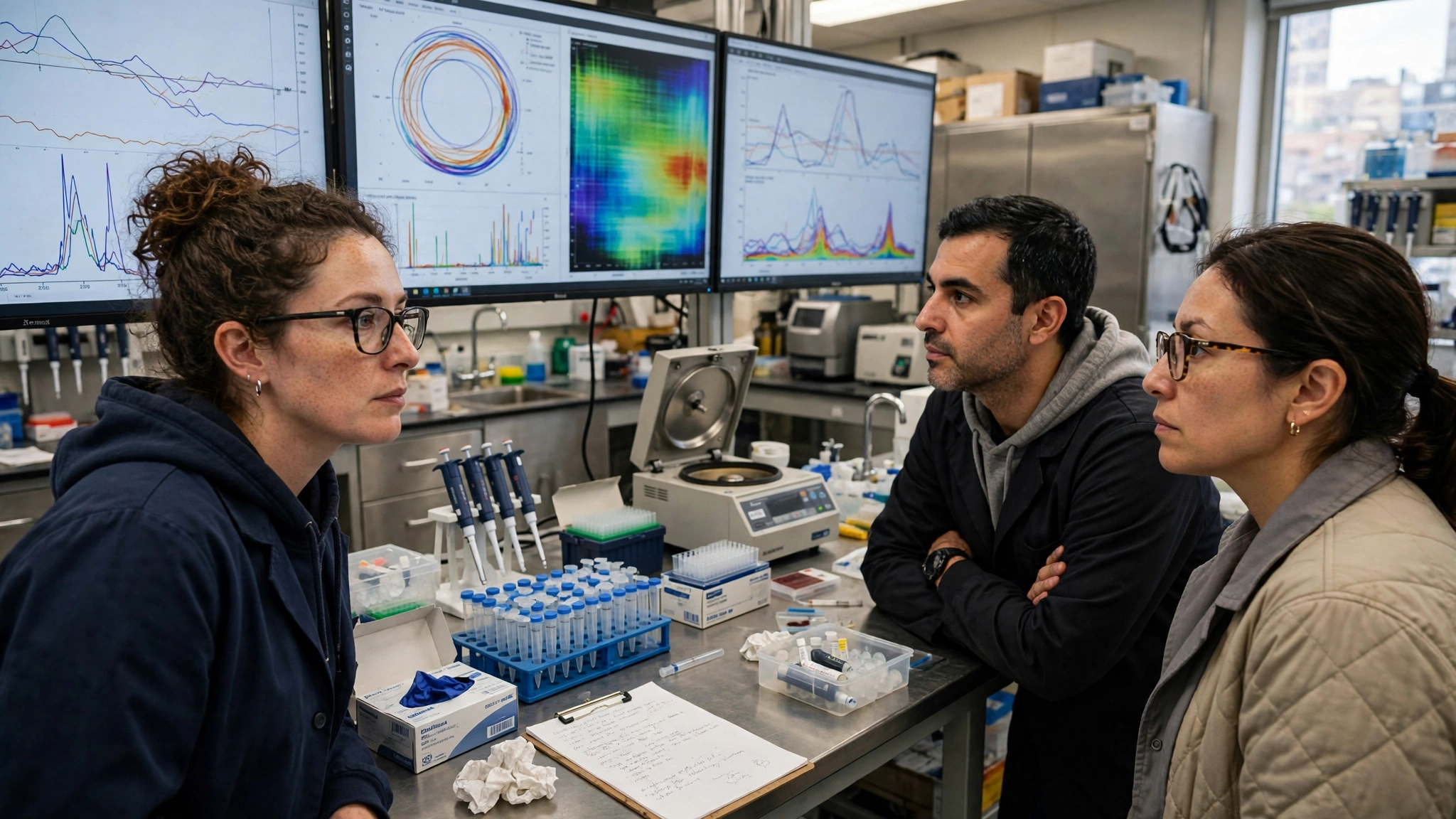
研究人员分析了超过100万人的遗传数据, 发现了58个与子宫内膜异位症相关的基因组区域, 其中27个区域此前未被确认。该研究于2026年11月20日发表于Nature Genetics期刊。
子宫内膜异位症是一种慢性疾病, 与子宫内膜相似的组织在身体其他部位生长。它影响全球多达十分之一的女性, 可引起剧烈疼痛和生育问题, 医生目前尚无治愈方法。本站近期的健康报道还包括索菲亚王后翻译奖报道等站内内容。
该团队汇总了全球14个生物样本库的结果。此前同类研究的样本规模小得多, 这限制了它们能检测到的区域数量。超过100万参与者的样本改变了计算方式: 在5万人研究中看不见的较弱信号, 可以上升到检测阈值以上。该论文在Nature Genetics上的编号为DOI 10.1038/s41588-026-02810-9。第一作者是Lindsay A. Guare, 资深作者是宾夕法尼亚大学佩雷尔曼医学院病理学与检验医学助理教授Shefali Setia-Verma。
在58个区域之外, 团队还同时分析了多种生物数据, 这种方法称为多组学分析。这些分析指向314个可能与该病相关的基因。研究还发现, 子宫内膜异位症与另外135种健康状况或特征存在遗传关联。共享关联并不意味着一种状况导致另一种状况, 它表明某些相同的生物通路同时出现在两者中, 这为药物研究人员提供了一份可以优先测试的更短通路清单。对于一种通常以激素治疗或手术处理疾病, 一份来自314个候选基因的通路清单是实验室工作的具体起点。
Setia-Verma表示, 通过研究多种类型的生物数据, 团队增进了对子宫内膜异位症如何发展并影响身体的理解, 研究结果将指导未来研究, 有望带来更好的诊断, 个性化风险评估和针对该病的治疗。美国国家儿童健康与人类发展研究所所长John Gaitanis表示, 这项大型研究的结果提供了关于子宫内膜异位症遗传基础的丰富信息。本站的爱子内亲王新加坡访问报道等报道也可在站内阅读。
诊断是需求可以衡量的一环。目前, 子宫内膜异位症通过临床评估确认, 在许多情况下还需要手术, 患者往往在首次症状和明确答案之间等待数年。遗传风险评估不能取代这一流程, 但研究作者将其作为一种可以更早标记高风险患者的工具提出。
English
Researchers analyzed genetic data from more than 1 million people and found 58 genomic regions linked to endometriosis, including 27 regions that had not been recognized before. The study was published in Nature Genetics on November 20, 2026.
Endometriosis is a chronic condition in which tissue similar to the lining of the uterus grows in other places in the body. It affects up to one in 10 women worldwide. It can cause severe pain and fertility problems, and doctors still have no cure for it.
14 Biobanks and More Than 1 Million Participants
The team combined results from 14 biobanks around the world. Earlier studies of this kind drew on far smaller collections, which limited the number of regions they could detect. A sample above 1 million participants changes the arithmetic: weaker signals that stay invisible in a study of 50,000 people can rise above the detection threshold.
The paper is listed as DOI 10.1038/s41588-026-02810-9 in Nature Genetics. Its first author is Lindsay A. Guare, and the senior author is Shefali Setia-Verma, an assistant professor of pathology and laboratory medicine at the University of Pennsylvania Perelman School of Medicine.
The scale of the dataset also matters for a second reason. It let the team test how endometriosis relates to other conditions in the same data, rather than guessing from separate studies. That kind of cross-check is becoming standard in large biobank work, much as the NIMBLE trial data behind this week’s Livsayis approval was read against matched comparison groups before regulators acted.
314 Genes and 135 Linked Traits
Beyond the 58 regions, the team ran analyses across several kinds of biological data at once, a method called multi-omics. Those analyses pointed to 314 genes that may be associated with the condition. The study also found that endometriosis shares genetic links with 135 other health conditions or traits.
Shared links do not mean one condition causes another. They show that some of the same biological pathways appear in both, which gives drug researchers a shorter list of pathways to test first. For a condition that is usually treated with hormone therapy or surgery, a pathway list drawn from 314 candidate genes is a concrete starting point for laboratory work.
“By studying many types of biological data, we were able to increase our understanding of how endometriosis develops and affects the body,” Setia-Verma said. “Our findings will help guide future research that could eventually lead to better diagnosis, personalized risk assessment and treatments that target the disease.”
John Gaitanis at the National Institute of Child Health
“The findings from this large study provide a wealth of information on the genetic underpinnings of endometriosis, a severely painful condition for which NIH is actively pursuing a cure,” said John Gaitanis, director of the Eunice Kennedy Shriver National Institute of Child Health and Human Development at the National Institutes of Health. “A greater understanding will help us take steps toward developing diagnostic tools and treatments to address this devastating disease.”
Diagnosis is one place where the need is measurable. Endometriosis is confirmed today through clinical assessment and, in many cases, surgery, and patients often wait years between first symptoms and a firm answer. A genetic risk profile would not replace that process, but the study’s authors present it as a tool that could flag high-risk patients earlier. Similar measurement gains drove the Fermi pulsar result published this week, where a larger usable dataset turned a hidden signal into a named object.
The condition’s burden helps explain the size of the effort. Pain is the symptom patients report most, and fertility problems bring many cases to medical attention. Because the tissue grows outside the uterus, standard hormone blood tests do not detect it, and imaging misses smaller lesions. That diagnostic gap is a large part of why a genetic study on this scale was funded.
The 135 shared traits give researchers a map of where to look next. If a pathway appears in both endometriosis and another studied condition, drugs already tested for that other condition become candidates for laboratory screening. None of that makes a new treatment imminent. It shortens the search list, which is the step that usually consumes years before any trial can be designed.
Biobanks make this design possible because they hold genetic data alongside medical records for the same participants. Linking the two lets researchers run a genome-wide scan against a confirmed diagnosis instead of a self-reported one. Fourteen separate biobanks also means the result had to hold across different record systems and different countries before it could be published as a combined finding.
Follow-up work now has a clear order. The 27 newly found regions come first, because their biology is the least understood, and the 314 candidate genes give laboratory teams a defined set to test in cell and tissue models during 2027.
The Nature Genetics paper was published on November 20, 2026, and its full dataset summaries are available through the journal record under DOI 10.1038/s41588-026-02810-9 for research groups planning follow-up studies.
本报道的其他版本也刊登在 News Today World, American Morning Herald, Newsy USA, The American Newsroom, Revista Minutos 和 Le Miroir Francais。








































Be First to Comment