
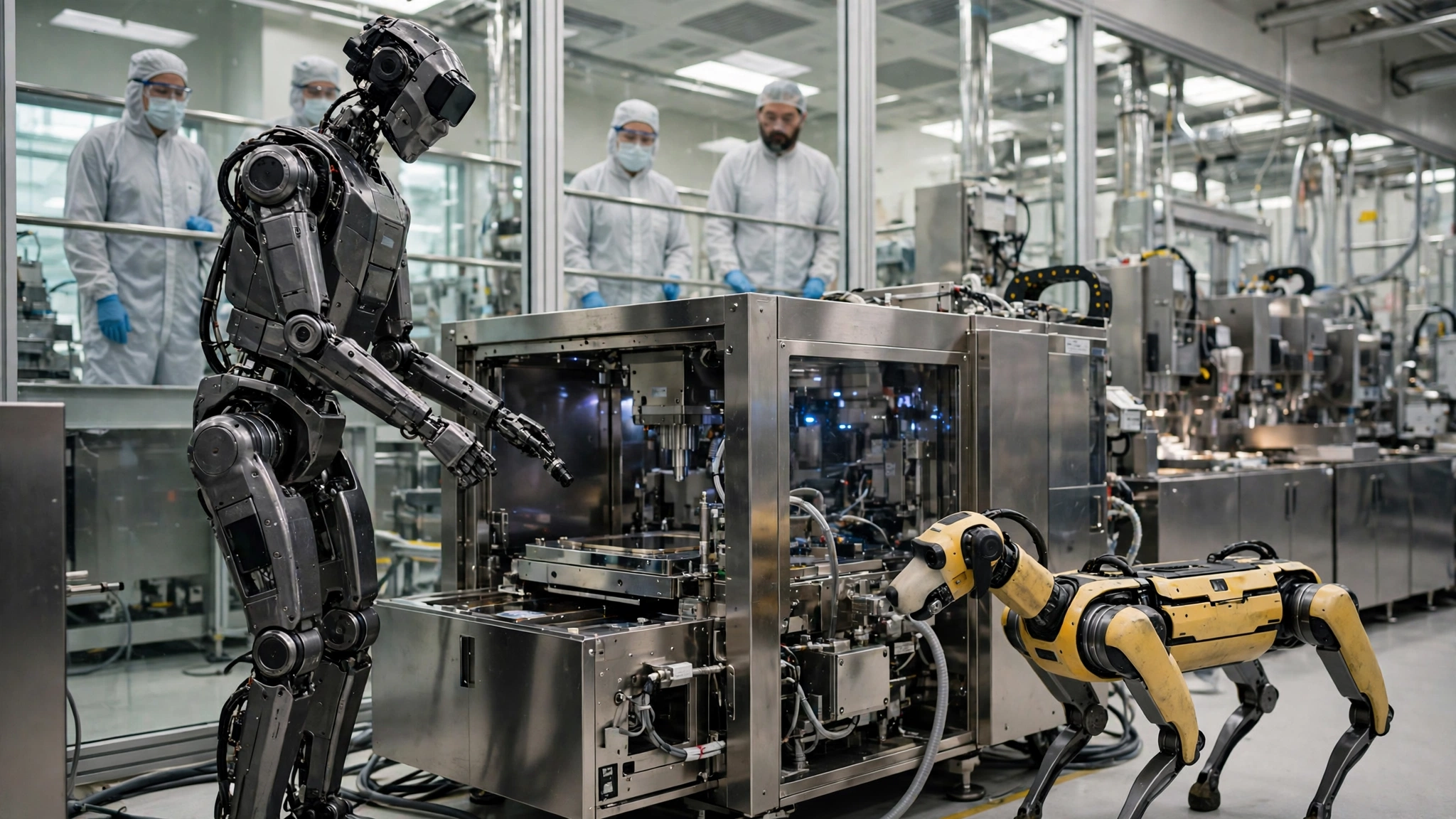
波士顿动力与格芯于11月17日宣布,双方将把Atlas人形机器人引入半导体工厂进行验证测试。这是Atlas首次在汽车行业之外接受验证,格芯也成为第一家测试人形机器人的半导体制造商。现场测试将于明年初在格芯的主要工厂开始,第一步是明确机器人在芯片工厂里适合承担哪些任务,以及工厂对机器人有哪些具体要求。双方同时宣布,波士顿动力的Spot四足机器人将扩大部署到格芯位于纽约、佛蒙特、德国德累斯顿和新加坡的工厂。
格芯与Spot的合作已经有实际记录。在佛蒙特工厂,Spot已经工作了四年多。在新加坡,两台Spot自今年4月以来在晶圆厂的地下层区域累计行走约900公里,完成超过90000次巡检,任务成功率达到99%。格芯计划把巡检工作量提高到现在的一倍以上。这些数字说明,扩大部署不是一次新的尝试,而是把已经验证有效的工作方式推广到更多工厂。本站关于新型镍提取工艺的报道和室温纳米激光器的报道的报道也记录了类似的路径,先在真实环境中跑出可靠数据,再决定扩大规模。
为什么芯片工厂适合人形机器人
半导体工厂有大量重复性的巡检、搬运和设备状态确认工作,环境整洁,流程标准,对记录准确性的要求很高。人形机器人的优势在于它可以适应为人设计的通道、门和设备布局,不需要为机器人单独改造整座工厂。格芯首席制造官普拉迪普-辛格表示,公司希望把预测性维护做得更好,让设备在出现问题之前就被发现和处理。波士顿动力首席产品与技术官杰克-兹加伊科夫斯基指出,格芯是最早使用Spot的客户之一,双方的合作有长期基础。
在汽车领域,现代汽车集团的机器人大都会应用中心正在为Atlas安排汽车工厂的任务。这次与格芯的合作把同一款机器人带进完全不同的生产环境。如果Atlas能在芯片工厂完成巡检辅助、物料移动和设备检查等任务,它的应用范围就会从汽车制造扩展到整个精密制造业。对工厂管理者来说,判断标准也很实际,机器人完成的任务数量、成功率和节省的人工巡检时间,都会在明年初的测试中得到答案。
下一步看测试结果
双方目前公布的是测试安排,而不是采购订单。测试将先确定任务清单和技术要求,再决定Atlas在工厂中的具体角色。这种先验证再扩大的做法,与Spot在格芯的经历一致,先用一座工厂的数据说话,再推广到全球工厂网络。明年初测试启动后,格芯公布的任务类型和完成情况,将是观察人形机器人进入芯片行业最直接的窗口。
对半导体行业来说,工厂停机的成本很高,巡检和预测性维护因此一直是管理重点。机器人如果能稳定完成重复巡检,并把设备状态数据完整记录下来,就能让工程师把时间用在判断和维修上。格芯已经用Spot在多座工厂积累了巡检数据,这次引入Atlas,是在已有自动化基础上再向前走一步。测试阶段先明确任务和要求,再决定机器人的具体分工,这种顺序也能降低新设备进入洁净厂房的风险,让每一步扩大都有数据支持。
English
Boston Dynamics and GlobalFoundries announced on November 17 that they will bring the Atlas humanoid robot into semiconductor plants for validation testing. It is the first Atlas validation outside the automotive industry, and GlobalFoundries is the first semiconductor maker to test a humanoid robot. On-site Atlas testing at major GlobalFoundries facilities begins early next year, in 2027, starting with identifying the tasks and requirements for robots in chip plants. At the same time, Boston Dynamics’ Spot quadruped robots will expand to GlobalFoundries sites in New York, Vermont, Dresden and Singapore.
The Spot record at GlobalFoundries is already concrete. Spot has worked at the Vermont plant for more than four years. In Singapore, two Spots have covered about 900 km in sub-fab areas since April, completing more than 90,000 inspections with a 99 percent mission success rate. GlobalFoundries plans to more than double its inspection workload. Those figures show the expansion builds on work that has already been proven, rather than starting from zero.
Why chip plants suit humanoid robots
Semiconductor plants have large amounts of repetitive inspection, handling and equipment-checking work, in clean, standardized environments where accurate records matter. A humanoid robot can use corridors, doors and equipment layouts designed for people, without rebuilding the plant around the robot. Pradeep Singh, GlobalFoundries’ chief manufacturing officer, pointed to predictive maintenance – finding equipment issues before they become problems. Jack Zgajkowski, Boston Dynamics’ chief product and technology officer, noted that GlobalFoundries was one of the first Spot customers, so the partnership has a long base.
In automotive, Hyundai Motor Group’s Robotics Metaplant Application Center is preparing Atlas tasks for car plants. The GlobalFoundries work takes the same robot into a very different production environment. If Atlas can handle inspection support, material movement and equipment checks in a chip plant, its range extends from car making into precision manufacturing more broadly. The test starting early next year will give plant managers the practical measures they need – tasks completed, success rates and inspection time saved.
Validation first, then decisions
What has been announced is a testing program, not a purchase order. The work starts by defining the task list and technical requirements, then decides what role Atlas should play in the plants. That sequence matches the Spot experience at GlobalFoundries – prove the work in one setting with real data, then extend it across a global factory network.
本报道也刊登于News Today World, Manhattan Mogul, Newsy USA, The American Newsroom, Revista Minutos and Le Miroir Francais。
Watch the Short on YouTube:










































Be First to Comment